For many Bahujans, the journey toward a fulfilling life and meaningful career often begins in challenging circumstances. Our early years are shaped by systems that prioritize survival over self-discovery, offering few opportunities for exploration, mentorship, or creative risk-taking. Generations of caste-based discrimination have made it difficult to dream freely, often forcing us to choose stability over passion and silencing our inner curiosity.
However, discovering your life’s purpose and building a career you love is not a privilege reserved for others; it is your right. No matter your starting point, you have the power to define your own path and create a life that honors your unique talents, values, and dreams.
In this article, we will explore practical steps and powerful concepts such as Ikigai, the Japanese philosophy of “reason for being.” This approach can help you reflect on your strengths, clarify your goals, and design a career that brings you joy and meaning. For Bahujans, this journey is not just personal. It is also a way to reclaim agency, break generational barriers, and inspire others in our communities.
Understanding Ikigai in the Bahujan Context
Ikigai is a Japanese concept that means “a reason for being.” It is often shown as a Venn diagram with four overlapping circles: what you love, what you are good at, what you can be paid for, and what the world needs. The place where these four circles come together is your Ikigai, which is your unique purpose that brings fulfillment and meaning to your life.
Let’s look at how these circles can be understood in practical Bahujan terms:
- What you love: This is what brings you peace and joy, even when no one is watching. It could be storytelling, helping others, creating art, or nurturing your family.
- What you’re good at: These are your learned and natural strengths, whether or not you have formal recognition. Think about the skills you have developed through daily life, community work, or personal interests.
- What you can be paid for: This involves understanding economic realities and exploring new digital opportunities. Skills such as digital literacy, content creation, and online entrepreneurship can now open doors that were previously closed.
- What the world needs: These are the gaps in your community or society that you can help fill. It might include supporting education, advocating for social justice, or creating spaces for cultural expression.
Reflecting on these four areas can help Bahujans reconnect with our cultural wisdom, empathy, and inner strength. This process is not just about personal growth. It is also a way to honor our heritage, uplift our communities, and build a more just and fulfilling future.

Start With These Four Powerful Lists
Discovering your life purpose and building a fulfilling career starts with self-reflection. One effective way to gain clarity is through the “3 x 4 Lists” method. This approach helps you organize your thoughts into four lists, each with three items, so you can better understand your interests, strengths, opportunities, and how you can contribute to the world’s evolving needs.
1. Three Things You Love to Do in Your Free Time
Ask yourself: What activities excite you naturally? What hobbies or interests do you keep returning to, regardless of trends or outside opinions?
Examples might include writing, experimenting with new technologies, designing, cooking, gaming, or creating digital content. These are the things that bring you genuine joy and satisfaction.
2. Three Things You’re Good At
Reflect on: What do people often compliment you on? What skills have you developed, whether through formal education or self-learning?
Examples include analytical thinking, coding, communication, creative problem-solving, teamwork, or public speaking. These strengths can be both technical and interpersonal.
3. Three Things You Could Be Paid For
Think about: What skills or services are in demand in today’s job market, both online and offline?
Examples include data analysis, software development, digital marketing, content creation, project management, or offering remote consulting. With the rise of the digital economy, many of these skills can be monetized globally.
4. Three Things the World Needs Right Now
Consider: What are the biggest challenges and opportunities in the world today? What new industries and technologies are shaping the future?
Examples include the need for expertise in artificial intelligence, cybersecurity, renewable energy, healthcare innovation, and sustainable business practices. Other growing fields are virtual and augmented reality, blockchain technology, green infrastructure, and digital education. The world also needs professionals who can help address climate change, improve mental health support, and bridge digital divides.
Take a moment to write down your 12 items, three for each list. This exercise will give you a clearer picture of where your passions, skills, and opportunities intersect, and how you can make a real difference in your own life and in your community.
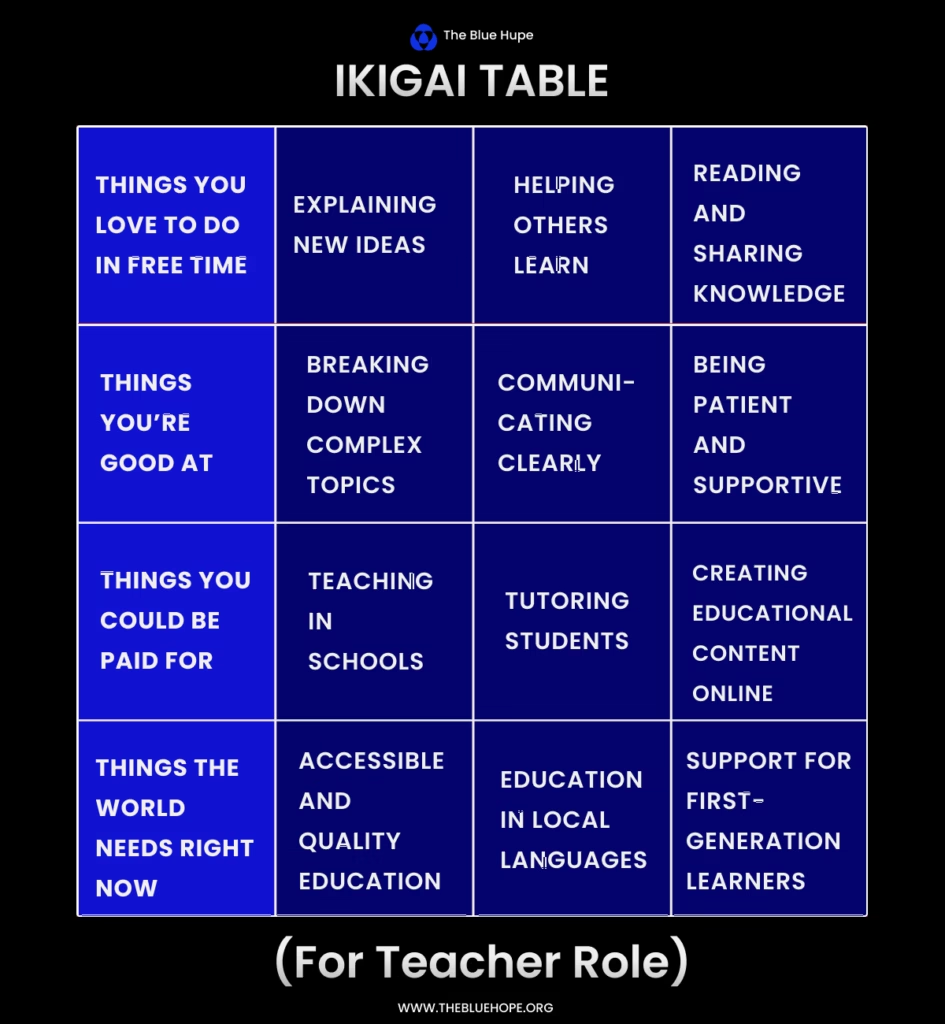
Connecting the Dots to Find Your Ikigai
After you have created your four lists, the next step is to look for patterns and connections among them. Take some time to review each list side by side. Ask yourself if there is any overlap between what you love and what you can be paid for. Consider whether you are good at something that also addresses a real need in your community or the world.
Let’s use engineering as an example:
- Loves: building things, solving problems, working with technology
- Good at: math, designing solutions, teamwork, using engineering software
- Paid for: engineering jobs in construction, software, manufacturing, or renewable energy
- World needs: better infrastructure, clean energy solutions, safer buildings, efficient technology
By connecting these areas, your Ikigai could be to become a civil or renewable energy engineer. For example, you might work on designing safer roads and bridges, or you could help develop solar power systems for communities. In this way, you use your passion for building and problem-solving, your technical skills, and your desire to make a positive difference in the world, while also earning a stable income.
It is important to remember that Ikigai is not about getting rich quickly. Instead, it is about finding a sense of purpose and creating long-term fulfillment in your life and work. When you align your career with your values and talents, you not only build a meaningful future for yourself but also contribute to positive change for others. Take time to reflect on your lists and explore how your unique combination of gifts can have a real impact.
Barriers Bahujans Face in Following Their Path
For many Bahujans, the journey to finding and following a meaningful career path is filled with unique challenges. Caste bias in hiring continues to limit opportunities, and the lack of mentors or supportive networks makes it harder to navigate the professional world. Language barriers and limited exposure to new fields or industries can also restrict choices and confidence.
Family expectations add another layer of difficulty. Many Bahujan families, facing economic instability, often encourage “safe” jobs in government or traditional sectors rather than riskier or less familiar paths. This pressure can make it difficult to pursue careers that align with personal interests or passions.
There are also mental and emotional barriers. Imposter syndrome, feelings of shame, and the impact of generational trauma can make it hard to believe in your own potential. These struggles are real and valid, but it is important to remember that having a sense of purpose can give you the strength to keep moving forward.
If you face these obstacles, consider starting small. You can begin exploring your interests or building new skills while working a stable job or continuing your studies. Over time, these small steps can help you gain confidence, build experience, and move closer to a career that truly fulfills you.
Tools and Habits to Help You Stay Focused
To stay on track with your Ikigai journey, try building these practical habits into your daily routine1:
- Journal your daily progress: Use an Ikigai journal format to note what you enjoyed, what you learned, and the steps you took toward your goals each day. This helps you reflect and stay motivated.
- Watch interviews of Bahujan professionals or activists: Listening to their stories can inspire you, provide guidance, and show you real examples of overcoming barriers.
- Join support groups or online communities: Find groups that affirm your identity and dreams. These communities offer encouragement, advice, and a sense of belonging as you pursue your goals.
- Practice time blocking: Set aside one hour each day to focus on building skills related to your Ikigai. Consistent, dedicated time helps you make steady progress.
- Use local languages to learn and teach: Don’t wait for perfect English to start. Learning and sharing in your own language makes knowledge more accessible and helps you connect with your community.
These tools and habits can help you stay focused, build confidence, and continue moving forward on your path to a fulfilling life and career.
FINAL WORDS: Reimagine Your Future with Courage
You are not behind, and you are not broken. You are building a path that was never designed for you, yet you are walking it with strength and determination.
Whether your dream is to argue in court, create art, teach children, write code, or start something of your own, your goal matters. It is real and it is possible.
Begin from exactly where you are, using your truth, your talent, and your voice. You do not have to wait for permission to imagine a life beyond struggle.
As a Bahujan, your purpose is more than just personal. It is powerful and carries the hopes of generations, along with the promise of something better for those who will come after you.
You deserve more than just a job. You deserve a life filled with dignity, joy, and expression.
“Our dreams are seeds of freedom. When we find our purpose, we water the future of our people.“