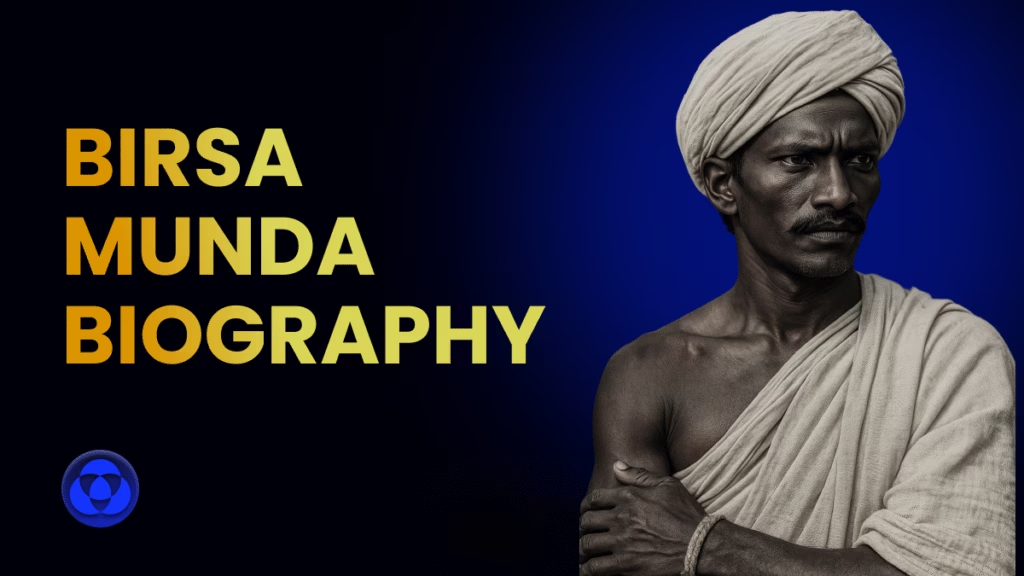
In the heart of India’s tribal lands, where ancient forests whisper tales of resilience, a boy was born who would ignite a flame of defiance that still burns in the hearts of the Bahujan people. Birsa Munda, a name synonymous with courage, sacrifice, and unyielding spirit, rose from humble beginnings to become a beacon of hope for India’s marginalized communities. This biography, crafted in a narrative style to inspire and resonate, traces his journey from a young boy in Ulihatu to a revered leader who challenged the might of the British Empire, leaving a legacy that continues to empower the Bahujan and tribal people of India.
The Boy from Ulihatu
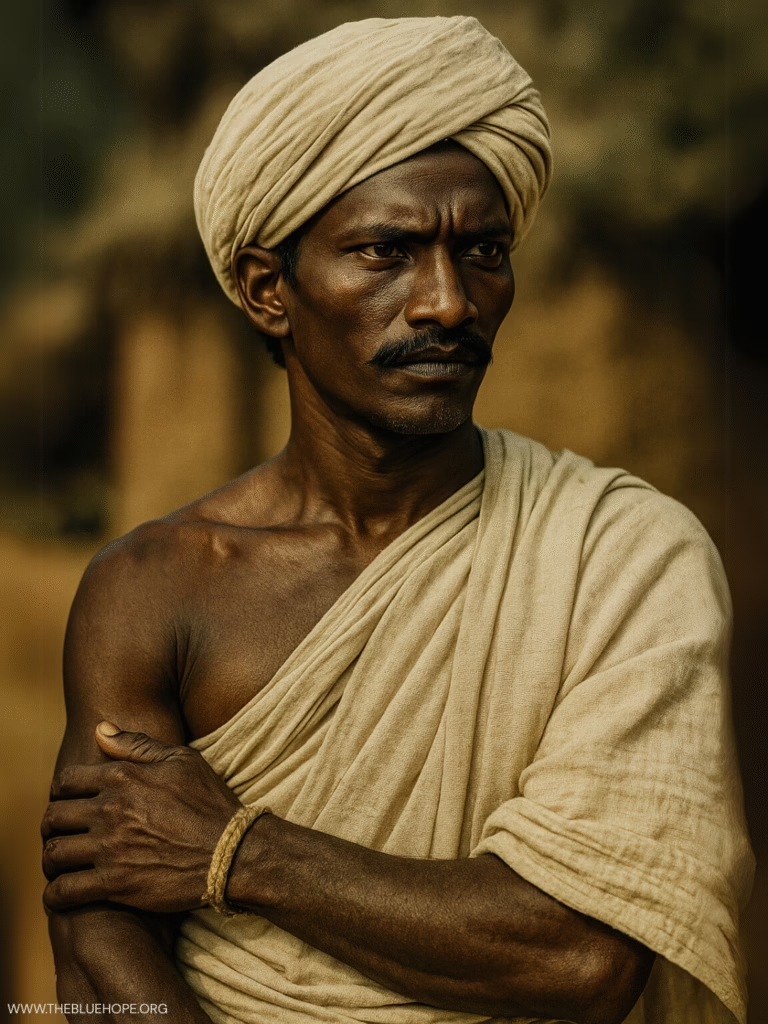
On November 15, 1875, in the village of Ulihatu, now in Jharkhand’s Khunti district, Birsa Munda was born to Sugana Munda and Karmi Hatu. Named after Thursday, as per Munda tradition, his early life was shaped by the rhythms of tribal existence, which included grazing sheep, playing the flute, and wrestling with friends. Yet, poverty was a constant shadow. The family moved frequently, from Ulihatu to Kurumbda, then to Bamba, seeking stability in a world disrupted by colonial encroachment.
Birsa’s childhood was not just about play; it was a crucible of resilience. Living briefly with his maternal uncle in Ayubhatu, he learned the value of community and the pain of displacement. These early experiences planted the seeds of his later resolve to fight for his people’s rights, a struggle that would resonate deeply with the Bahujan, who face similar challenges of marginalization and loss.
Education and Awakening
As Birsa grew, his curiosity led him to seek education beyond the village. Under the guidance of Jaipal Nag in Salga, he began his studies. To access better opportunities, he converted to Christianity, taking the name Birsa David (later Birsa Daud), and enrolled in the German Mission School in Chaibasa. Here, he encountered new ideas but also became aware of the subtle agenda of the missionaries, who sought to assimilate tribals into colonial frameworks.
By 1890, Birsa’s exposure to the independence movement in Chaibasa awakened a critical consciousness. He saw the British not as benefactors but as oppressors who sought to erode tribal identity. Rejecting the missionary path, he left the school, a bold act that marked his return to his roots and set the stage for his leadership. This moment of awakening mirrors the journey of many Bahujan individuals who reclaim their cultural identity in the face of systemic pressures.
The Visionary and the Birth of Birsait
In 1895, Birsa Munda, born into the Munda Adivasi community, had a transformative spiritual experience. During this moment, he envisioned a supreme power calling him to revive the indigenous tribal way of life and to resist both colonial rule and cultural domination. At Chalkad in Tamar, he publicly rejected Christianity, a religion introduced through colonial imposition, and declared himself a prophet of his people. He announced the end of Queen Victoria’s rule and the beginning of Munda Raj, a vision of tribal self-rule rooted in dignity, land, and cultural sovereignty.
Birsa’s actions were not only spiritual but also deeply political. Through his teachings, healing practices, and leadership, he inspired thousands. His followers, known as Birsaits, saw him as a liberator who could restore hope to a people who had been displaced, exploited, and stripped of their humanity by colonial forces and caste-based society.
At the heart of Birsa’s message was the demand for land justice. He challenged both the British Empire and the oppressive zamindari system that had replaced the traditional Khuntkatti communal landholding practices of the Adivasis. This system enabled non-tribal landlords, known as Dikus, to take over tribal lands, destroying centuries of indigenous self-governance and economic autonomy. Birsa’s call to refuse rent payments to colonial authorities was a bold act of resistance against these exploitative structures.
His message remains deeply relevant to the ongoing Bahujan struggle. Just as Dalits, OBCs, and other marginalized communities continue to resist caste-based and systemic exclusion, Birsa Munda stood for reclaiming land, identity, and dignity. His movement was not limited to tribal rights; it was a broader fight against all forms of imposed hierarchy and domination.
Birsa Munda continues to inspire generations as a symbol of anti-caste resistance. He reminds us that the path to justice and liberation begins with the assertion of one’s rightful place in history and society.
The Ulgulan: The Great Tumult (1895–1900)
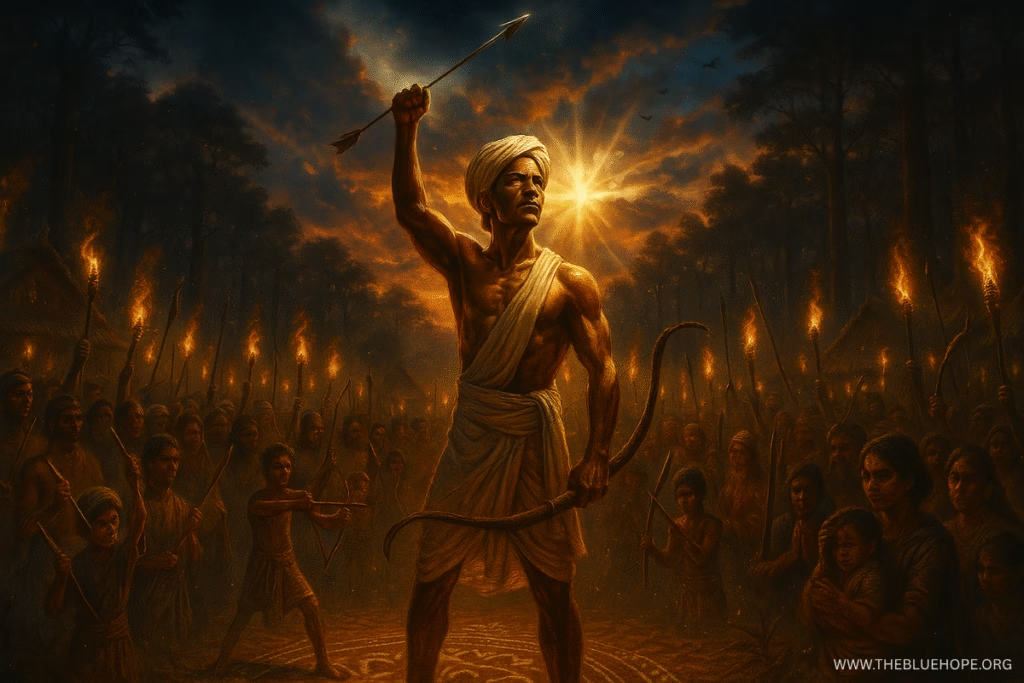
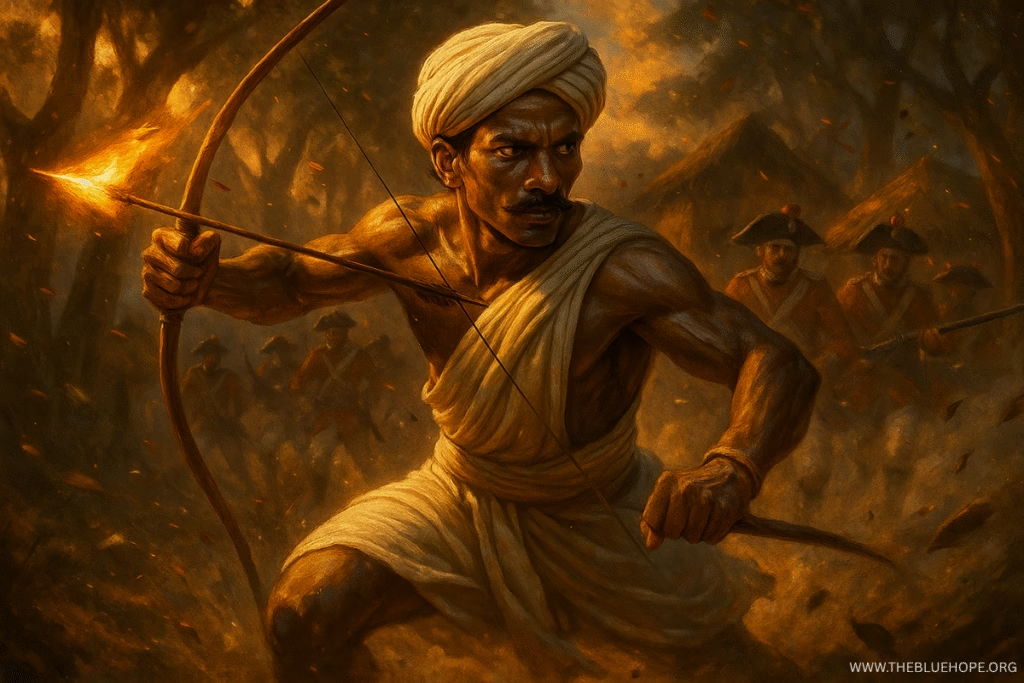
As Birsa Munda’s influence grew among the Adivasi masses, the British colonial administration viewed him as a serious threat. On August 24, 1895, he was arrested and sentenced to two years in prison. However, his spirit remained unbroken. When he was released in 1898, Birsa emerged with renewed resolve. Going underground, he began to mobilize once again. By late 1899, he had gathered nearly 7,000 followers and launched what came to be known as the Ulgulan, meaning “Great Tumult.”
This was not just a rebellion. It was a bold assertion of tribal dignity and sovereignty. The movement directly targeted the institutions of colonial control, including churches and police stations. On January 7, 1900, Birsa’s followers attacked the Khunti police station, killing a constable. The act sent a clear message to the British that their rule was not uncontested.
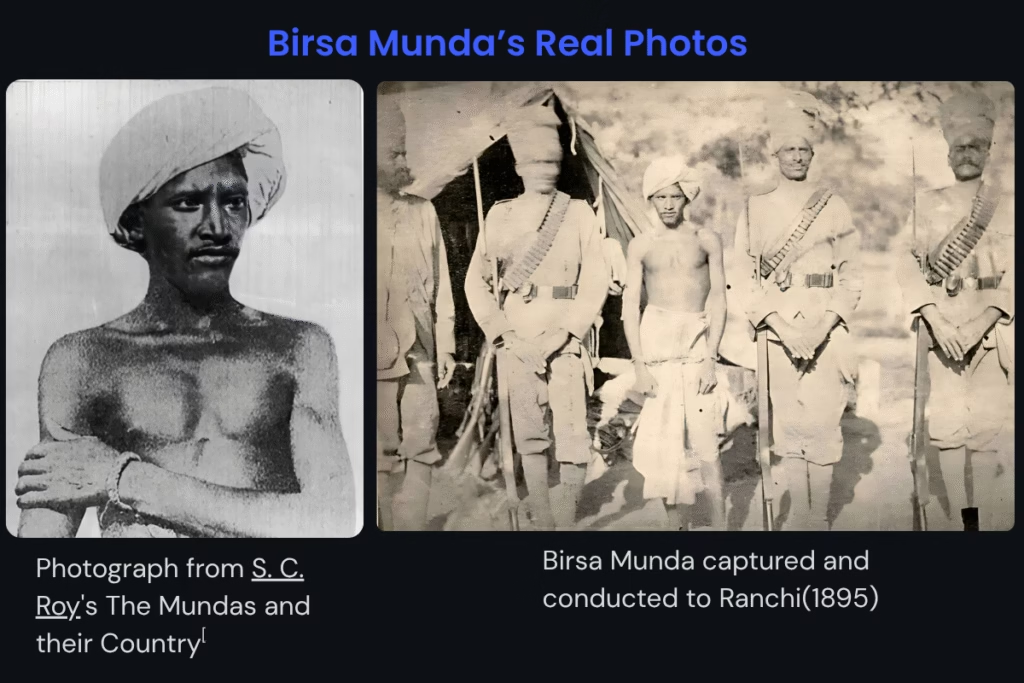
The British responded with swift and brutal repression. On February 3, 1900, Birsa was captured in the forests of Jamkopai near Chakradharpur. He was imprisoned in Ranchi, where his health quickly declined. On June 9, 1900, at just 24 years old, Birsa Munda died under suspicious circumstances. While the British claimed cholera as the cause, many believe he was poisoned to prevent his growing influence from spreading further.
The crackdown was severe. A total of 460 tribal people were charged. Of these, 63 were convicted and sentenced to death, life imprisonment, or long prison terms. The British aimed not only to eliminate the rebellion but to silence an entire people demanding justice.
Yet, the Ulgulan was never just a failed uprising. It was a radical declaration of self-rule and resistance by a marginalized community against systemic violence and erasure. For the Bahujan, it stands as a powerful example of collective courage in the face of empire and caste-driven exploitation. Birsa’s legacy reminds us that even those pushed to the margins of history can rise, resist, and redefine the future.
Legacy and Light for Bahujan Youth
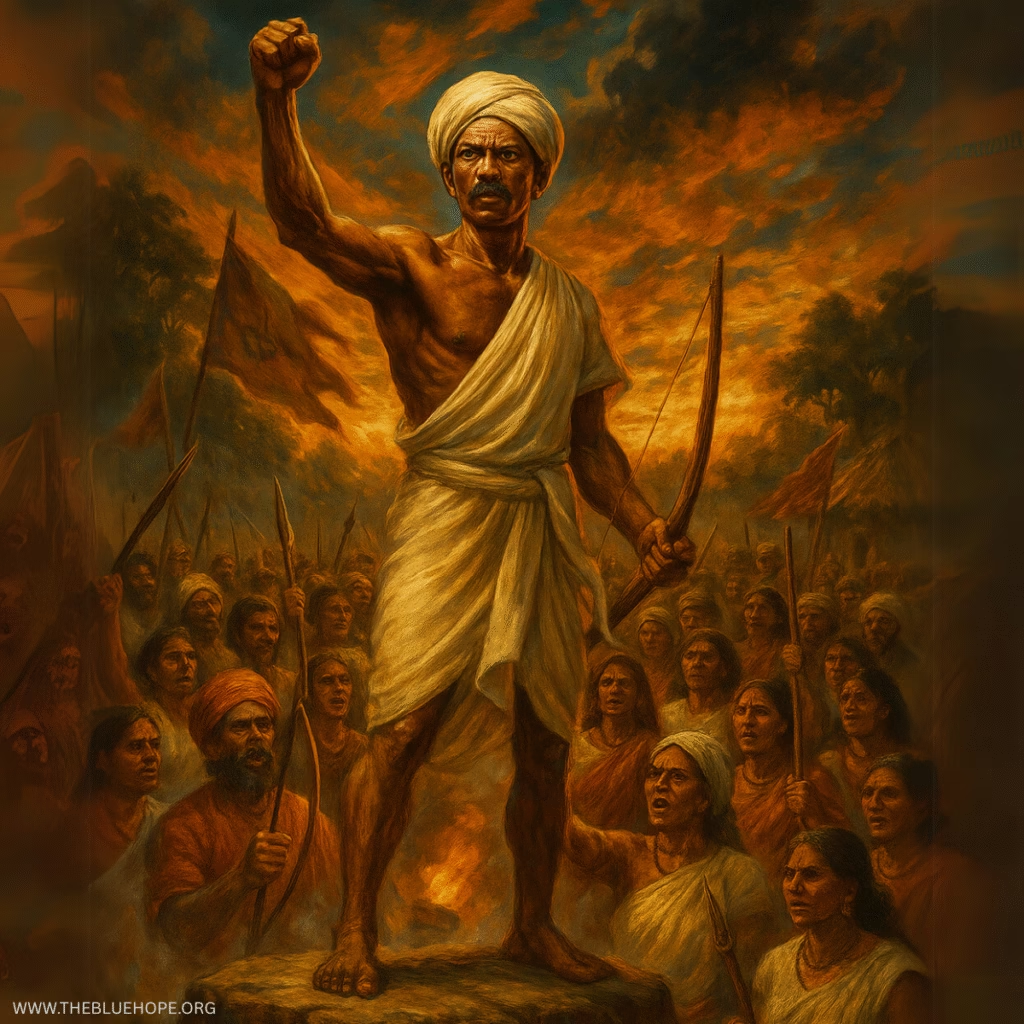
More than a century has passed, but Birsa Munda’s legacy continues to inspire. From a humble hut in Ulihatu, he rose to become the Dharti Abba (Father of the Earth) and a beacon of pride for the Bahujan community. His life embodies the values of resistance, dignity, identity, community, and faith. These values still speak powerfully to today’s youth from tribal, Dalit, and other marginalized backgrounds.
President Droupadi Murmu, who herself belongs to a tribal community, recently described Birsa’s aspirations for freedom, justice, identity, and dignity as a continuing source of inspiration for the youth of India. As a child, she heard his story and felt a deep pride in her heritage. Today, his struggles are remembered as heroic acts etched in the collective memory of the nation.
His legacy lives on in many ways:
Names and Memorials
The state of Jharkhand was created on Birsa’s birth anniversary, November 15, in the year 2000. Ranchi’s airport is named Birsa Munda Airport, and numerous schools, universities, and public institutions across India carry his name. The Jharkhand Regiment of the Indian Army honors him with the motto “Birsa Munda Ki Jai.” Towering statues, like the one at Dombari Hill, stand as powerful symbols of his lasting presence.
Bahujan and Tribal Movements
Birsa’s legacy is not limited to a single region. His story has become part of India’s broader freedom struggle. He is regarded as one of the earliest advocates of Adivasi self-rule, inspiring generations of tribal leaders and social movements. From the formation of the Jharkhand Party to modern activism against land displacement, his vision lives on. His resistance to land grabs and forced religious conversions mirrors today’s battles over mining, deforestation, and cultural autonomy.
Cultural Pride
Birsa encouraged his people to honor their heritage. Today, tribal festivals, songs, and dances celebrate his name and legacy. Although the Birsait faith he founded may not survive as a structured religion, the spirit behind it remains. Tribal traditions are now recognized as sacred and integral to India’s cultural fabric. Even the legal recognition of the Sarna faith owes much to Birsa’s emphasis on cultural self-respect.
Birsa as a Symbol of Possibility
For Bahujan youth, those from Scheduled Castes, Scheduled Tribes, and Other Backward Classes, Birsa Munda represents more than history. He is a powerful symbol of what is possible. His life proves that education, unity, and faith can challenge even the mightiest empire and the oldest forms of injustice. As President Murmu said, people from all communities and regions can draw inspiration from his life.
Values That Guide Us Forward
Resistance
Birsa’s story teaches us to rise whenever our dignity is denied. Whether it is land, water, or fundamental rights under threat, his example urges us to stand united and face injustice with courage.
Dignity and Identity
He believed his people deserved respect. He wore a sacred thread and promoted spiritual and cultural renewal on his own terms. Today’s Bahujan youth can proudly embrace their identity, preserve their language and culture, and remain rooted even as they move forward in modern society.
Community and Service
Birsa healed the sick and brought people together. He showed that true leadership begins with service. Young Bahujans can learn from him by building up their communities through education, healthcare, and solidarity.
Faith and Culture
Birsa saw no divide between faith and freedom. He drew strength from various traditions and used that strength to uplift his people. He taught tolerance while holding firm to self-respect. Bahujan values continue to reflect this balance, respecting all traditions while standing firmly for one’s own dignity.
Birsa once declared, “The tribal people are the real proprietors of the soil.” This truth remains unchanged. The land and culture of India belong to its native people. Their rights must be protected and honored. Today’s youth can carry his legacy forward by standing up for environmental justice, demanding equality in schools, and remembering the heroes who came before us.
A Call to Action for the Bahujan Youth
Let Birsa’s flame continue to burn within us. His life is not just a story from the past. It is a call to action. We must:
- Learn our history. Understand the stories of leaders like Birsa so we know where we come from and what we stand for.
- Stand united. Whether we belong to different castes or tribes, our struggles are connected. Together, we can challenge social and economic oppression.
- Preserve our culture. Celebrate our songs, dances, and festivals. Teach the next generation that we come from fighters, not victims.
- Serve our people. Just as Birsa cared for the sick and poor, we can give back through education, healthcare, and community support.
- Hold on to pride and hope. Birsa Munda showed that one young person, supported by their people, can stand up to power and change history.
TThough his life was short, Birsa Munda’s legacy is everlasting. It lives on in the mountains of Jharkhand and in the hearts of millions. We are the heirs of Dharti Abba’s dream, a future where everyone lives with dignity, where the land is worked by its rightful owners, and where justice and hope guide our every step.
A Timeline of Birsa Munda’s Life
| Year | Event |
|---|---|
| 1875 | Born on November 15 in Ulihatu, Jharkhand, to Sugana Munda and Karmi Hatu. |
| 1886–1890 | Attended German Mission School, converted to Christianity as Birsa David. |
| 1890 | Left school, reverted to tribal religion, influenced by independence movement. |
| 1895 | Had a divine vision, founded Birsait faith, declared Munda Raj. |
| 1895 | Arrested on August 24, sentenced to two years in prison. |
| 1898 | Released from prison, went underground to plan Ulgulan. |
| 1899 | Launched Ulgulan movement, attacked colonial symbols with 7,000 followers. |
| 1900 | Attacked Khunti police station on January 7; captured on February 3. |
| 1900 | Died in Ranchi jail on June 9, aged 24. |
| 2000 | Jharkhand state formed on November 15, Birsa’s birth anniversary. |
| 2021 | November 15 declared Janjatiya Gaurav Divas by Indian government. |
Why Birsa’s Story Resonates Today
Birsa Munda’s life is a testament to the power of resistance. For the Bahujan, his story is a reminder that their voices matter, their culture is valuable, and their fight for justice is righteous. He united tribals across villages, transcending divisions to create a collective force against oppression. His emphasis on cultural revival through the Birsait faith speaks to the Bahujan’s ongoing efforts to preserve their heritage in a world that often seeks to erase it.
Birsa’s courage in facing the British Empire, despite overwhelming odds, inspires the Bahujan to confront systemic inequalities. His legacy is not just in monuments or holidays but in the spirit of defiance that lives on in every Bahujan individual who dares to dream of a just and equitable society.
References
NCERT, Modern India, NCERT, 2007.
Kumar, K. N., Tribal Resistance Movements, TRI, 1998.
Jharkhand Gazette, Govt. of Jharkhand, 2005.
Chandra, Bipan, India’s Struggle for Independence, Penguin, 1989.
Singh, K. S., Birsa Munda and His Movement, Seagull, 2002.
Devi, Mahasweta, Aranyer Adhikar, Karuna, 1977.
Annual Report 2021–22, Ministry of Tribal Affairs, 2022.
Jharkhand Gazette, Govt. of Jharkhand, 2020.